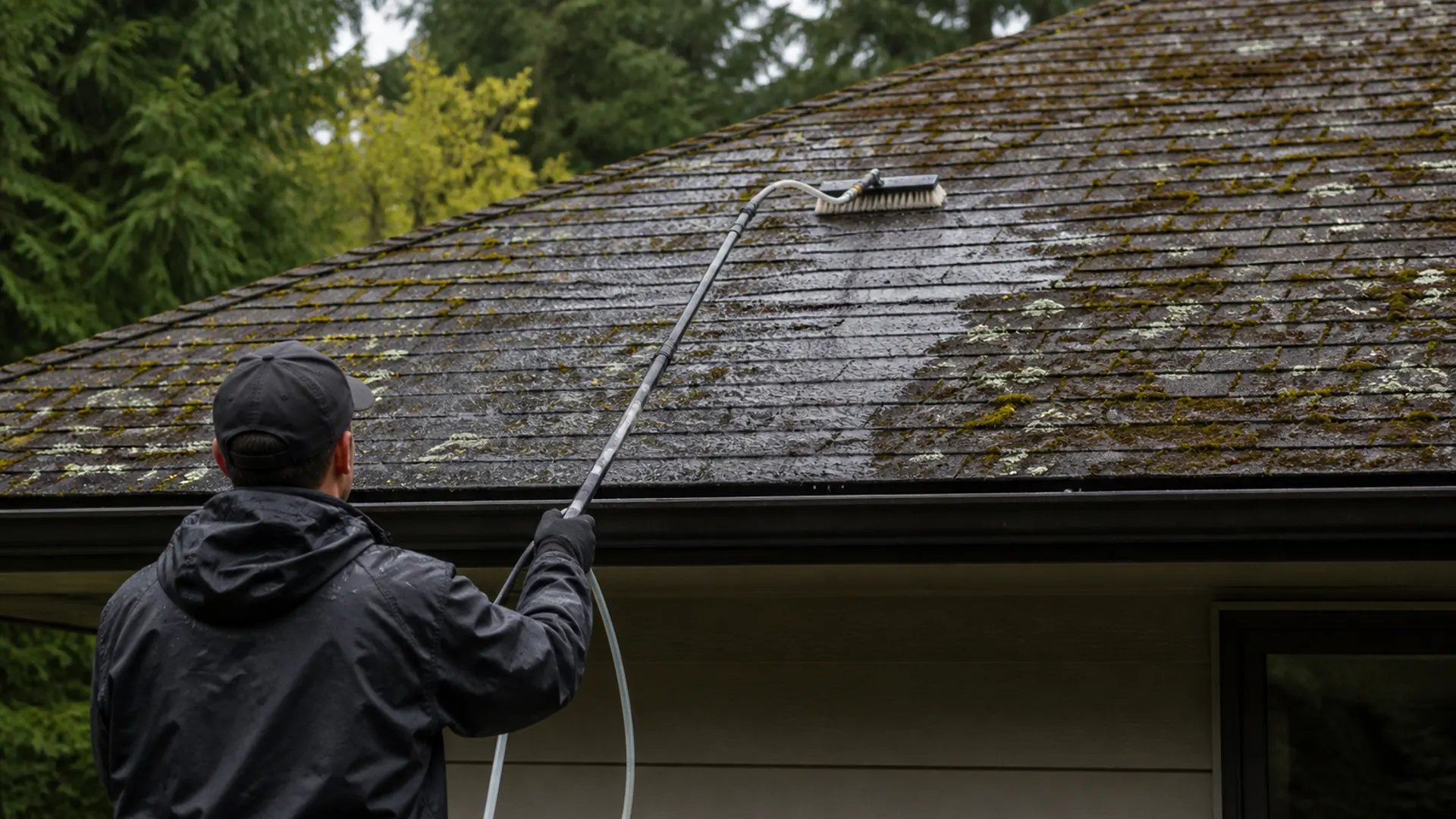

Why blasting roof moss is inappropriate
Established moss can be attached to or growing around a vulnerable roof surface. Aggressive pressure or scraping can damage shingles, coatings, tiles, flashings, and already weak areas. A request should ask for roof-specific assessment rather than instructing a provider to blast the moss away.
Roof material, approximate age, granule or coating condition, loose pieces, repairs, leaks, pitch, and safe access all affect what may be considered. A future provider should explain the proposed treatment or removal steps and identify any conditions that require a roofer or other specialist first.
- Roof material, age, and visible wear
- Moss coverage, thickness, and locations
- Pitch, storeys, valleys, and safe access
How moss removal differs from general cleaning
General roof cleaning may focus on surface staining, loose debris, or broader appearance. Moss removal focuses on an attached living or dried growth and the roof condition beneath it. The work may require staged expectations rather than immediate visual removal, depending on the assessed process.
Describe whether moss is concentrated at shaded edges, valleys, lower slopes, around penetrations, or beneath nearby trees. Avoid diagnosing roof health from appearance alone. The provider should determine whether cleaning is suitable and what result can reasonably be expected without creating new damage.
Roof condition and access details
Include the number of storeys, roof pitch, lower roof sections, skylights, solar equipment, chimneys, gutters, neighbouring setbacks, overhead lines, and possible equipment positions. Do not climb onto the roof to collect information. Safe ground observations and available roof records are enough for an initial request.
Mention leaks, missing or lifted materials, soft decking concerns, recent repairs, or a planned roof replacement. Moss removal does not correct those defects. A provider may need to decline or postpone cleaning until the roof is made safe, and no availability should be implied before that review.
What can affect moss recurrence?
Shade, moisture, nearby trees, debris retention, drainage, roof orientation, and surface condition can influence how quickly moss becomes noticeable, but no website can predict a recurrence interval for a specific property. Ask what maintenance observations are appropriate after the roof is assessed.
Also describe gutters, downspouts, landscaping, ponds, siding, patios, and neighbouring areas below the roof. Any proposed treatment and runoff-control plan should account for those surroundings. Product choice, protection steps, timing, and follow-up remain provider decisions after inspection.
Set staged and roof-safe expectations
Ask the provider to explain whether the proposed process is immediate, staged, or dependent on later weathering, and what visible change can reasonably be assessed. Confirm the roof sections, access, debris handling, gutter considerations, plant protection, and conditions that would stop work. Moss treatment or removal should never be framed as roof repair, a warranty extension, or a promise that growth will not return. Those distinctions belong in the written scope.