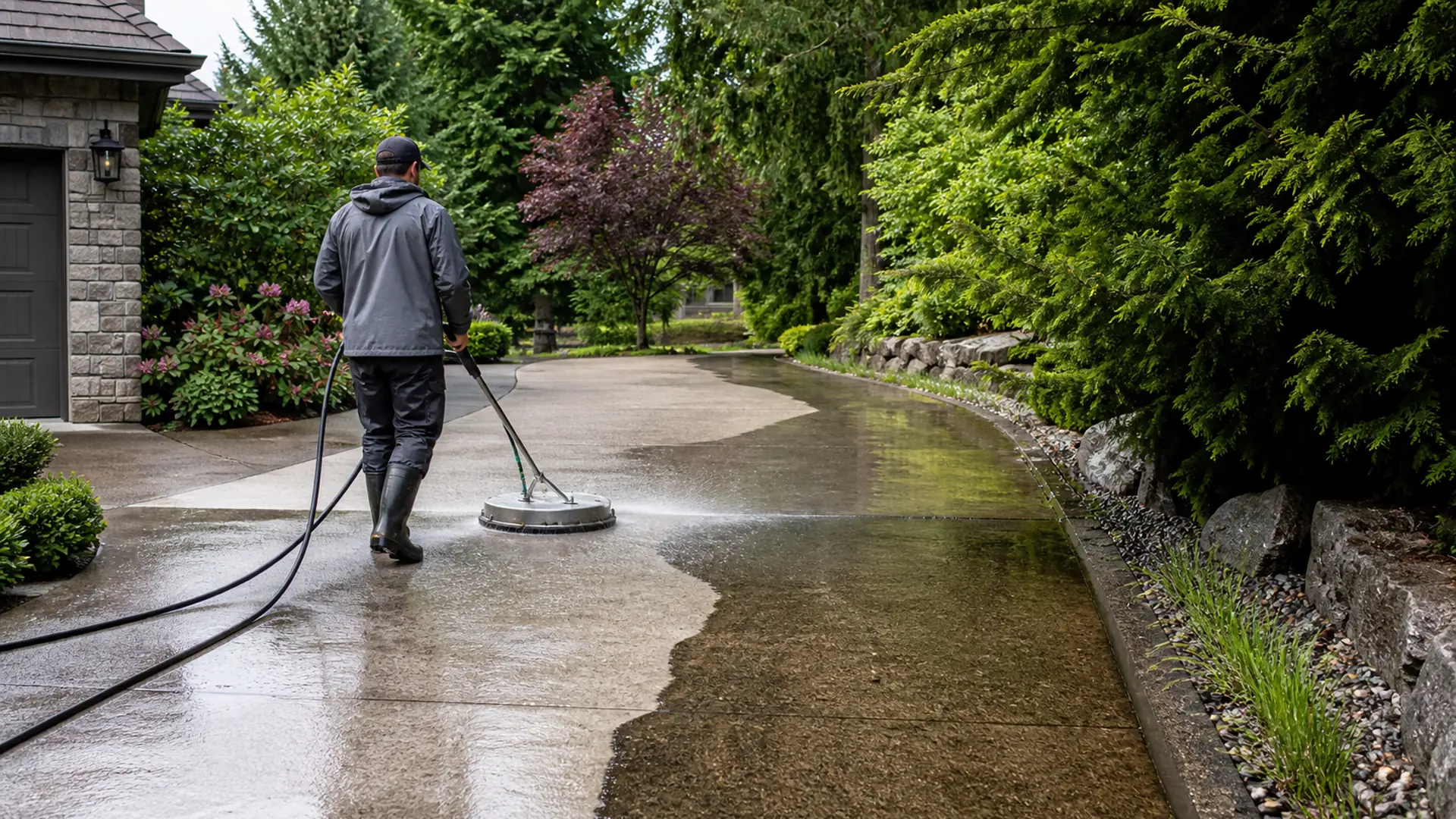

What should be assessed on a driveway?
Start by identifying concrete, exposed aggregate, pavers, asphalt, or another surface. Note repaired cracks, joints, coatings, sealers, loose material, and edges beside landscaping. A method suitable for sound uncoated concrete may be unsuitable for a coated, damaged, or softer finish.
Describe where dirt, organic growth, tire marks, rust-coloured marks, oil-like spots, or other discoloration appears. The description helps separate removable surface buildup from stains or permanent colour changes that may only improve. No result should be promised before the material and cause are reviewed.
- Paving material, coating, and repairs
- Approximate dimensions and slope
- Stain locations and nearby drains
Concrete cleaning and stain expectations
Concrete is porous, and material below the surface can behave differently from loose debris on top. Age, previous treatments, freeze-thaw wear, aggregate exposure, and the length of time a stain has been present can affect what an appropriate cleaning process can achieve.
Ask a future provider to distinguish cleaning from restoration, repair, or resealing. Cleaning should not be presented as a way to erase cracks, surface scaling, etching, faded sealer, or colour differences. A small inconspicuous test area may be worth discussing when the finish or prior treatment is uncertain.
Property owners comparing “pressure washing near me” for a driveway should look for a scope that identifies the paving material, stain type, drainage route, and realistic limits before work is confirmed.
Access, water, and drainage details
A Mission driveway request should describe parking access, vehicle-move timing, gates, hose reach, neighbouring properties, downhill runoff, catch basins, and street or sidewalk edges. Sloped or shared driveways can need a more deliberate setup than a flat open pad.
Identify landscaping, loose gravel, garage doors, low vents, exterior electrical fixtures, and pedestrian routes near the work. The provider should review how water and loosened material will be controlled and whether site rules or local restrictions change the plan. Do not assume runoff can simply be directed to a roadway or drain.
How to prepare a driveway-cleaning request
Measure approximate length and width, list adjoining walkways or steps separately, and identify the areas with the heaviest buildup. State whether the driveway is private, shared, strata-managed, or used for commercial access. If another service is being considered, describe it as a separate surface rather than combining everything into one vague area.
Before a confirmed appointment, ask what must be moved and when the surface can be used again. Vehicles, bins, planters, hoses, sports equipment, and temporary signs may need relocation. Final preparation, drying, treatment, and access instructions should come from the provider after the scope has been assessed.
Compare the proposed driveway scope
A written proposal should identify the exact paving areas, stain expectations, preparation, runoff plan, edges, and exclusions. Ask whether adjoining steps, sidewalks, garage aprons, or paver sections are included instead of assuming they are part of the driveway. If a coating or sealer is present, confirm how that changes the proposed method. Any restoration, repair, stain treatment, or resealing should be described separately so cleaning is not confused with a guaranteed surface renewal.