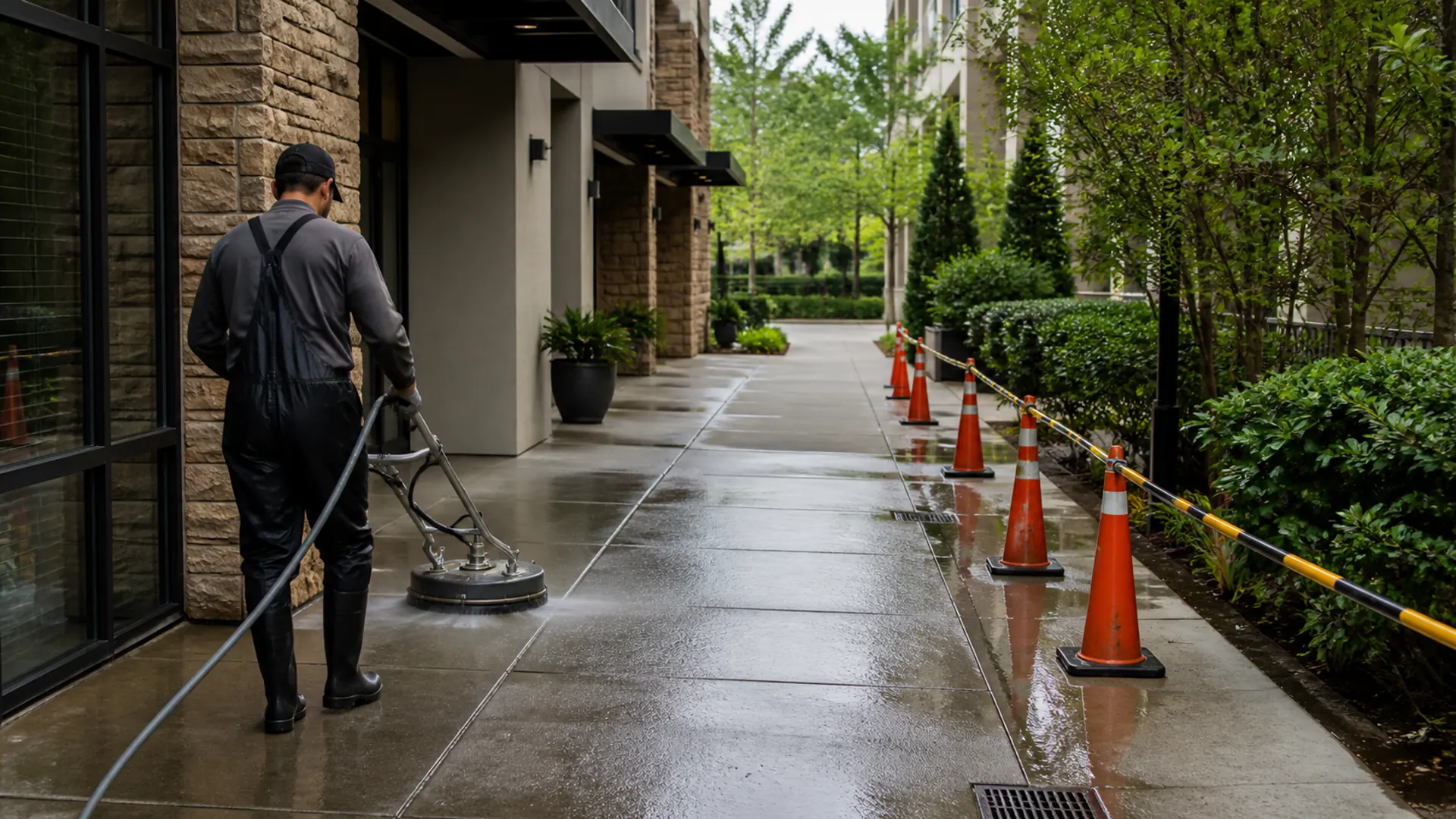

How should a commercial scope be defined?
Begin with property type and the specific areas under review: storefront approaches, walkways, loading areas, parkades, waste enclosures, low-rise building exteriors, windows, strata common areas, or another surface. Give approximate dimensions and material for each rather than combining unrelated areas into one total.
Identify the authorized contact and explain who can approve scope, timing, changes, and site access. A tenant, strata council, property manager, owner, or facilities contact may have different authority. The eventual provider should confirm documentation and decision-making requirements before treating the request as accepted.
- Authorized contact and approval process
- Surface-by-surface area and condition
- Operating hours, occupants, and public access
Access and scheduling need site-specific review
Describe customer traffic, residents, deliveries, parking, loading, gates, elevators, security, noise limits, and preferred work windows. Work around an occupied property can require notices, phased areas, barriers, or coordination that is not visible from square footage alone.
Do not promise overnight, weekend, urgent, or low-disruption service in the request. Availability and staging depend on the future provider's capacity and the site's rules. State the operational constraints, then ask for a written plan and exclusions after assessment.
Water, drainage, and mixed surfaces
List available exterior water information, drains, catch basins, landscaped edges, public sidewalks, neighbouring units, and areas where runoff is restricted. A commercial site may have environmental, municipal, lease, or building procedures that must be understood before a cleaning method is selected.
Concrete, pavers, coated floors, siding, masonry, painted surfaces, roofing, and glass do not share one method. Identify coatings, repairs, damaged sections, grease-like buildup, organic growth, mineral deposits, and unknown stains separately. The provider should assess material compatibility and realistic results.
Strata and managed-property preparation
A strata or managed-property request should describe resident or tenant notices, common-property boundaries, parking moves, balcony access, pets, locked areas, and the process for reporting existing damage. Clarify whether the request is exploratory budgeting or an approved project ready for formal review.
Ask what insurance evidence, safety documents, site orientation, permits, supervision, or vendor registration the provider can supply, without assuming credentials that have not been verified. Final method, crew, equipment, pricing, timeline, and availability must remain conditional on provider vetting and site review.
Compare commercial proposals on the same scope
For a useful comparison, give each prospective provider the same surface schedule, site rules, access windows, drainage information, documentation requirements, and known damage. Review inclusions, exclusions, preparation, resident or tenant coordination, traffic control, and change procedures rather than comparing totals without context. The selected provider should confirm current credentials and capacity directly. This website does not verify those items merely by accepting an initial request.
Record who can authorize changes, receive site reports, and confirm completion. If the work must be phased, identify the order, reopening conditions, and communication responsibilities for each area before scheduling.
A property manager searching for “power washing near me” should compare providers against the same surface schedule, site rules, access windows, drainage details, and documentation requirements.