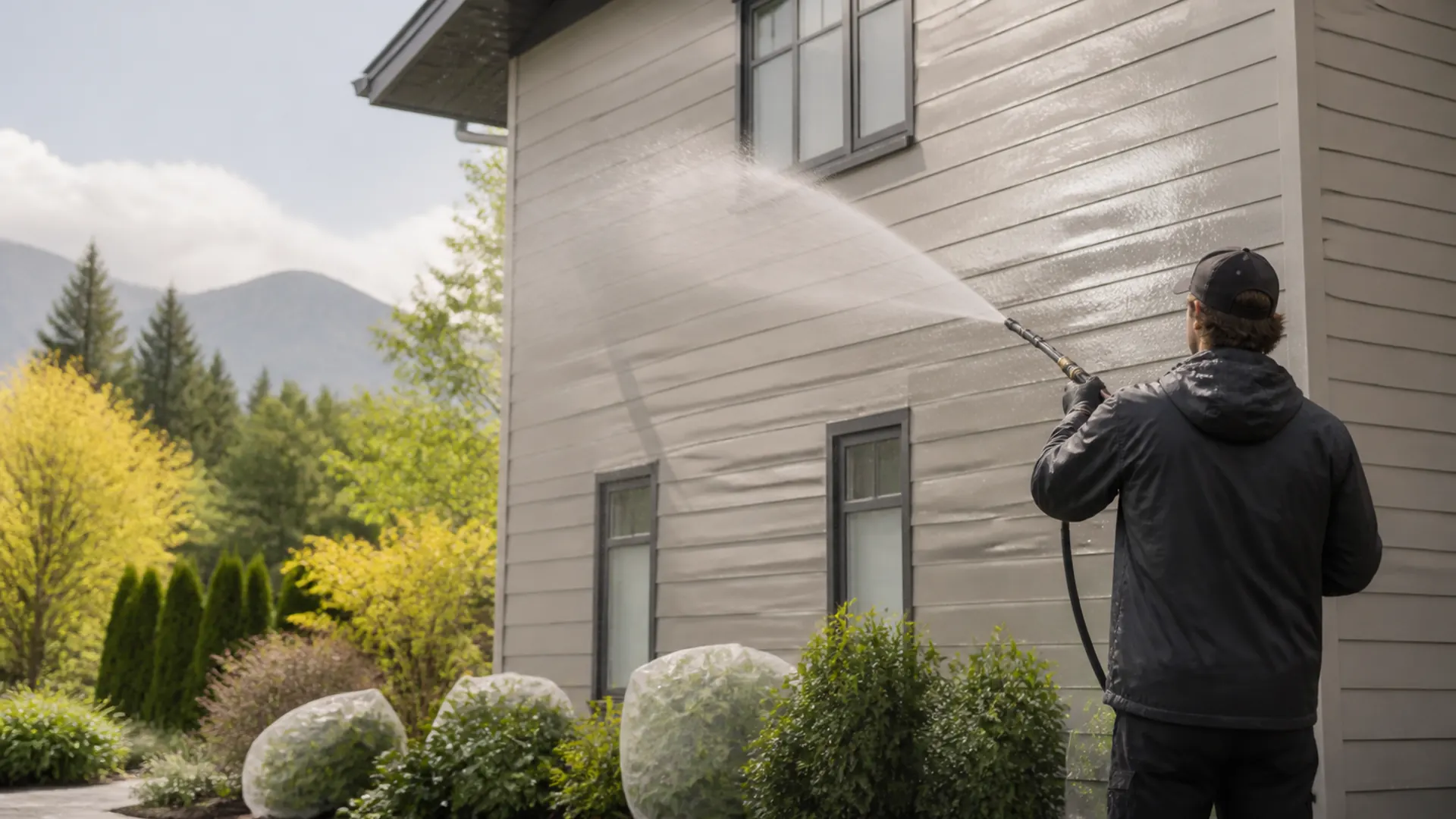

Is pressure washing safe for house siding?
The safe approach depends on siding material, age, coatings, joints, and existing damage. Vinyl, fibre cement, painted wood, stucco, masonry, soffits, and trim do not share one universal cleaning setting. Include those details so method selection can be reviewed before work is confirmed.
Loose paint, cracked caulking, failed seals, open vents, damaged panels, and water-entry concerns should be identified at the request stage. Excessive pressure or a poorly directed rinse can force water behind finishes or mark a vulnerable surface, so an inspection-first decision is more useful than requesting one method by name.
When Mission homeowners compare results for “power washing near me”, the useful question is not simply how much pressure is available, but whether the proposed method suits the siding, seals, coatings, and existing condition.
- Siding material and approximate age
- Storeys, rooflines, and access
- Loose paint, failed seals, or visible damage
Where soft washing may fit
Soft washing is a lower-pressure approach that may be considered when force could damage a finish. The label alone does not establish that it is appropriate: cleaning products, dwell time, rinsing, landscaping, runoff, manufacturer guidance, and the condition of the building still need review.
Describe the type and location of buildup rather than assuming every dark or green mark has the same cause. Dust, organic growth, traffic film, oxidation, and permanent colour change can call for different expectations. A provider should confirm the proposed process and any areas that will be excluded before scheduling.
What shapes a house-washing estimate
Useful estimate details include the number of storeys, approximate wall area, siding types, additions, decks, narrow side yards, gates, parking, exterior tap access, and areas above conservatories or lower roofs. Mixed materials can make a simple square-foot comparison misleading because preparation and access may differ around the same home.
Mention nearby plants, ponds, outdoor electrical fixtures, openable windows, security equipment, and neighbour access. If the project is intended to prepare for painting or another repair, include that objective and timing. Pricing and availability should remain conditional until the requested scope and site conditions have been assessed.
Preparing the exterior for review
Before requesting work, note fragile items and decide what can be moved from walls, balconies, patios, and entryways. Vehicles, furniture, toys, planters, and decorations may affect access. Keep windows closed, secure pets, and follow the eventual provider's instructions for outlets, plants, water, and occupancy.
A concise request can list each elevation and the material found there, followed by height, visible condition, and access. Photographs may be requested later through an approved private process, but do not send sensitive household information through an unapproved channel. The final method and preparation steps belong in the confirmed scope.
Confirm scope and expectations in writing
Before accepting an estimate, compare the named elevations, included trim, preparation responsibilities, protection steps, access assumptions, and exclusions. Ask how existing oxidation, failed coatings, leaks, or fragile sections affect expectations. The written scope should distinguish cleaning from repair and should leave no suggestion that every mark will disappear. It should also identify what property changes, weather, or newly discovered damage could require the provider to revise the plan before work proceeds.